

 Tweet
Tweet
I can't tell too well from the picture (more / better pics would be great) but I'm 99% sure it has a lot of Finnish Spitz in it (or Shiba Inu - they're almost the same breed, one has a coat, the other doesn't (funny how one is from Japan and the other is from Finland)). We've had them before - a great dog. If she's about 30 pounds then she's most likely mixed with something else a little larger - they're traditionally around 25 pounds. I'm sure she isn't the perfect picture of health right now but with her on god food and a loving home she should come out of her shell. Here's a picture of Bella:
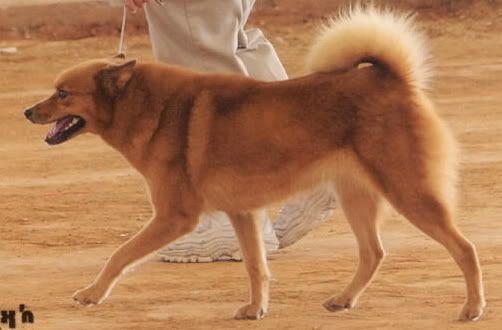
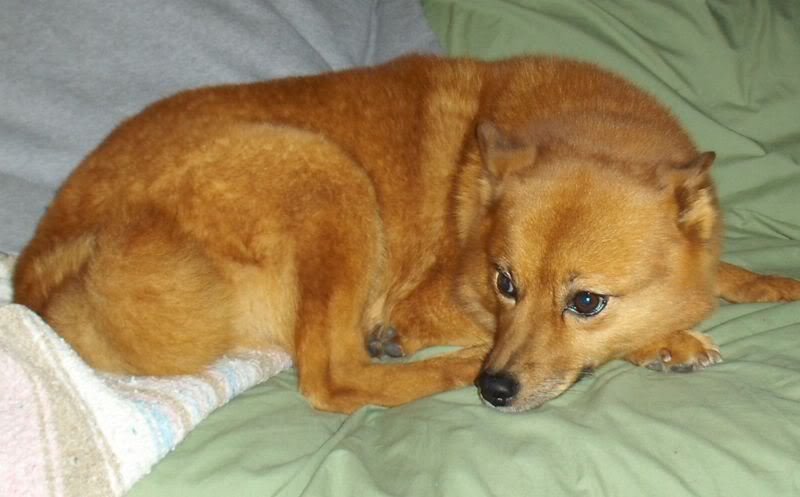
And pictures of the litter of puppies we had in 2008:
http://s118.photobucket.com/albums/o...GingerPuppies/
They can be independent and will come to you when they want attention (they won't be up your ass 24-7 like a malinois).
They can be intelligent and have a good nose - expect long walks with her sniffing around a lot (at squirrels, mice, cats, and other vermin).
They were initially bred to be a hunting dog and were almost extinct in the mid 1800's until a group of people realized the value of the dog and brought the breed back to life. Today they're traditionally a varmint hunting dog. Farmers use them to hunt out mice, rats, raccoons, and other vermin. They're small enough to get into barns, into small crevices and holes, etc.. to chase out (and catch?) the vermin.
They're a northern breed (UKC and the new AKC classification - no longer a "non sporting breed"). They're also a very primitive breed meaning they haven't been "civilized" like many breeds (labs, etc..) I think they're one step "newer" from the ancient breeds (a Shiba Inu is considered an ancient breed) it is confirmed that the breed is several thousand years old.
The biggest disadvantages of them is that they sometimes may not do well with strangers but luckily they'll avoid the stranger as opposed to going after them. Allegedly they do not do well in heat, too but the two we had did fine here in south Florida. I wouldn't keep them outside all day in the hot summer but walks (we'd sometimes go on walks over an hour) and they'll be fine - just remember to keep them hydrated.
I know a good breeder in my area if you want more information on them.
As for the topic of the thread, I had to laugh at this.
I run a website for an expert on the German shepherd (he literally wrote the book on the correct German shepherd). quite often when he gets emails from people he'll CC me on them. Last night he got a question - someone has a lab who has hypothyriod (sounds familiar?). They found his site by doing a search on the issue and liked his "different point of view and ideas" on the subject (many vets treat this with a "one size fits all" attitude for treatment).
What did the expert suggest? Exactly what we did - try experimenting with different levels of soloxine and if that doesn't help to work their way to stronger medications.
This expert I met though Gallon's owner and they are very good friends. Funny how it seems like he agrees that what we did was the best for the dog (I haven't mentioned the situation to him yet).
And pictures of the litter of puppies we had in 2008:
http://s118.photobucket.com/albums/o...GingerPuppies/
They can be independent and will come to you when they want attention (they won't be up your ass 24-7 like a malinois).
They can be intelligent and have a good nose - expect long walks with her sniffing around a lot (at squirrels, mice, cats, and other vermin).
They were initially bred to be a hunting dog and were almost extinct in the mid 1800's until a group of people realized the value of the dog and brought the breed back to life. Today they're traditionally a varmint hunting dog. Farmers use them to hunt out mice, rats, raccoons, and other vermin. They're small enough to get into barns, into small crevices and holes, etc.. to chase out (and catch?) the vermin.
They're a northern breed (UKC and the new AKC classification - no longer a "non sporting breed"). They're also a very primitive breed meaning they haven't been "civilized" like many breeds (labs, etc..) I think they're one step "newer" from the ancient breeds (a Shiba Inu is considered an ancient breed) it is confirmed that the breed is several thousand years old.
The biggest disadvantages of them is that they sometimes may not do well with strangers but luckily they'll avoid the stranger as opposed to going after them. Allegedly they do not do well in heat, too but the two we had did fine here in south Florida. I wouldn't keep them outside all day in the hot summer but walks (we'd sometimes go on walks over an hour) and they'll be fine - just remember to keep them hydrated.
I know a good breeder in my area if you want more information on them.
As for the topic of the thread, I had to laugh at this.
I run a website for an expert on the German shepherd (he literally wrote the book on the correct German shepherd). quite often when he gets emails from people he'll CC me on them. Last night he got a question - someone has a lab who has hypothyriod (sounds familiar?). They found his site by doing a search on the issue and liked his "different point of view and ideas" on the subject (many vets treat this with a "one size fits all" attitude for treatment).
What did the expert suggest? Exactly what we did - try experimenting with different levels of soloxine and if that doesn't help to work their way to stronger medications.
This expert I met though Gallon's owner and they are very good friends. Funny how it seems like he agrees that what we did was the best for the dog (I haven't mentioned the situation to him yet).


Comment